An Introduction
Welcome to the brainchild of my love for music videos and analysing inscrutable details in the audiovisual sector. My background of expertise lies in music production (mixing, mastering, recording) with a lifelong relationship with musical instruments and their cousin, music theory. After studying an BA in Audio Production, an MA in Music and Audiovisual Media and another MA in Immersive Media, I felt there was still a significant gap of public knowledge in the phenomena that is audiovisual media. It is still a relatively new term in the music and film industry and one that has a different definition depending on who you ask. There have been job advertisements that ask for an audiovisual engineer, and by that, they mean someone to set up the powerpoint presentation for a corporate company. Ask a filmmaker, and they may tell you it’s a new term for what they are already doing. A musician may argue it is the performance element of a show: dancers, pyrotechnicians, lighting etc…
My rudimentary interpretation of audiovisual media resides in music videos. For me, it is as simple as describing it as aural and visual information that are designed to go together (or not!) and therefore one of the most obvious forms of media that fits into that category is music videos. I have a particular penchant for visual albums (something we will delve into deeply later) and found there was not enough academic information to support my learning, consequently leading me to take a step back and assess the limited research into music videos.
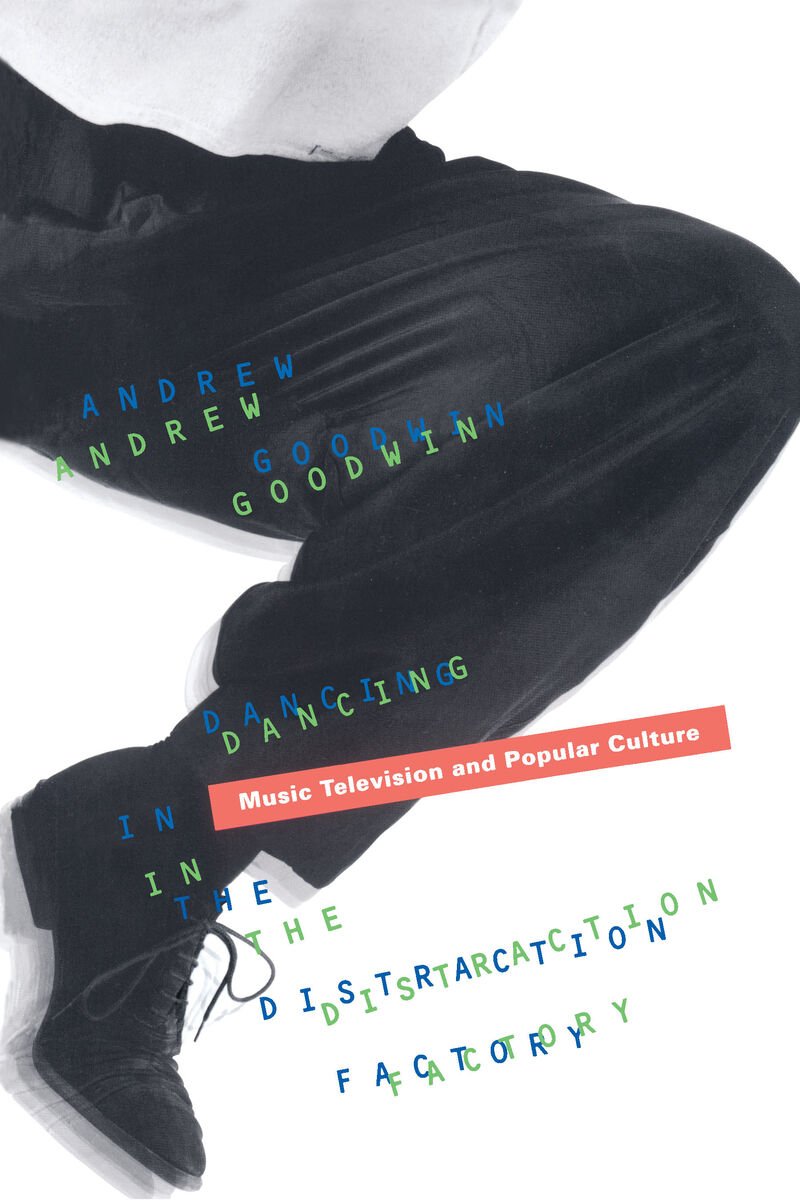
There are two books I will regularly cite and refer to, the first being Andrew Goodwin’s Dancing in the Distraction Factory (1992) which details the birth of music video and how it became an art form. This book has been an inspiration for this blog and I would highly recommend purchasing and reading it as a precursor to this blog (not that it is necessary, but will help having a frame of reference for context). From there, I was able to garner an understanding of the early music video industry; how it affected music, socially, financially, economically, and was able to apply it in the evolution that is visual albums. Goodwin’s literature alone would have gotten me through my undergraduate dissertation, however I needed an nth term of references to qualify for a higher grade. After reading Dancing in the Distraction Factory, I sought after advice from Andrew Goodwin after learning he was a UK national like myself, in the hopes I could obtain his views and informed opinions on visual albums. Sadly he passed away within the last ten years of writing this so this was not possible, but he leaves a legacy and an imprint on how music videos are understood today. The second piece of literature I may often make references to is Arved Ashby’s Popular Music and the New Auteur (2013) which takes a compositional approach in film and how popular directors of our time have used music in a signature fashion that can only be linked to them. Auteurism was a rabbit hole of interest to me as I yearned to see it applied in a musical sense.
The purpose of this blog helps me get my ideologies onto paper (or digital paper) as not everyone always understands or is interested in this particular field. Which means, if you have made it here, you are my niche audience and you perhaps are looking for the same thing I am! As time goes on, the articles will gain more structure and coherence as I figure out what may be imperative to each song rather than spewing the first critiques that come to mind. However, after years of watching music videos and understanding production value and film theory, I am excited to integrate these with philosophies that explore feminism, capitalism, westernisation to reveal an underlying message that may not be obvious on the first play through. The AudioVisual Communique aims to look at music videos from all genres and time periods, so do not hesitate to contact and put forward suggestions if a particular era or style is not being targeted.